

If you are in your late twenties, thirties, forties or older and thinking about becoming an electrician, the usual questions are whether you are too old for an apprenticeship, whether you can live on an apprentice's pay, and whether the work you have already done counts for anything. This guide answers those questions from federal apprenticeship rules and from apprenticeship sponsors' own published requirements, as we found them in October 2026.
Each program sets its own rules, so the programs named below are examples, not a rule for every program. Confirm the details with the program you apply to.
Is there an age limit?
The federal rules for registered apprenticeship set a floor, not a ceiling. They define an apprentice as "a worker at least 16 years of age, except where a higher minimum age standard is otherwise fixed by law," and they require each program's standards to state its minimum qualifications "with an eligible starting age not less than 16 years" (29 CFR 29.2 and 29.5).
Electrical sponsors set their own minimums above that floor. The electrical training ALLIANCE, the IBEW and NECA's training organization, lists "Minimum age 18" among the typical requirements for a union (JATC) program. Some programs let you apply a little earlier:
| Program | Published age requirement |
|---|---|
| Louisville Electrical JATC | 17 to open an application; at least 18 to be accepted |
| Minneapolis Electrical JATC | At least 17 to apply; 18 to be hired |
| Toledo Electrical JATC | At least 17 |
| Greater Boston JATC | 18 or older; 2027 applicants must turn 18 by August 31, 2027 |
| Hawaii Electricians Training Fund | At least 18 |
| IEC Texas Gulf Coast | At least 18 |
None of the sponsor pages we checked for this guide lists a maximum age. Independent Electrical Contractors (IEC), which runs open-shop programs through its chapters, says directly: "There is no upper age limit for starting an electrical apprenticeship." It adds that people of any age can start "provided they meet the necessary qualifications and are physically capable of performing the required tasks."
Registered programs are also barred from age discrimination against older applicants. The federal equal opportunity rules for registered apprenticeship make it unlawful for a sponsor "to discriminate against an apprentice or applicant for apprenticeship on the basis of race, color, religion, national origin, sex, sexual orientation, age (40 or older), genetic information, or disability" (29 CFR 30.3). Sponsors repeat this in their own pages. Houston's JATC says its committee selects apprentices "regardless of" listed characteristics including age, "except the applicant must be at least 18 years of age." Richmond's and Louisville's JATCs publish similar statements that refer to age 40.
These rules cover programs registered with the U.S. Department of Labor or a state apprenticeship agency. If a program is not registered, they may not apply in the same way, so ask any program whether it is registered and with which agency. Our guide to union vs open-shop electrical apprenticeships explains the kinds of sponsors.
The physical side of the job
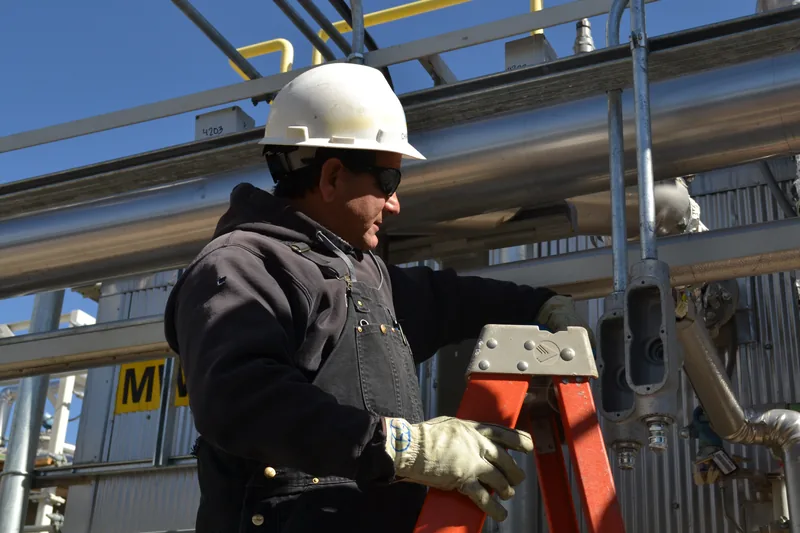
No source we checked sets a different physical standard for older applicants, but every route expects you to do the work. Houston's JATC describes apprentices "digging a ditch, handling heavy conduit or equipment, pulling heavy cable" and "climbing an extension ladder," in all weather, and lists being "physically fit and healthy" among its requirements. On its application, the Hawaii Electricians Training Fund asks applicants to state that they are "Able to climb and work from ladders, scaffolds, poles and towers of various heights" and "Able to crawl and work in confined spaces such as attics, manholes and crawlspaces."
Reflection question: have you done physical work in heat, cold and on ladders for a full shift recently? If not, a short stint as a helper or in construction before you apply would tell you more than any guide.
What you earn while you train
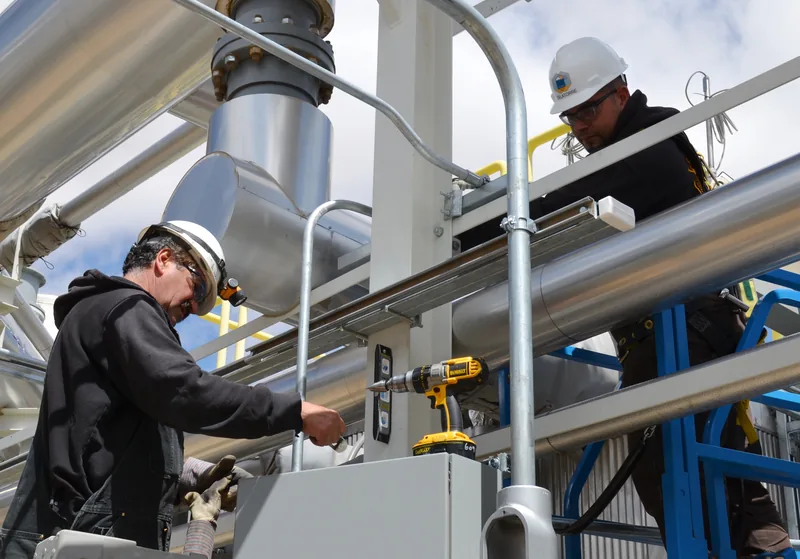
An apprentice is employed and paid from the start. Federal rules require a registered program to have "a progressively increasing schedule of wages to be paid to the apprentice consistent with the skill acquired," and the starting wage may not be below the federal minimum wage where it applies, or a higher rate set by other law or a collective bargaining agreement (29 CFR 29.5(b)(5)). The Bureau of Labor Statistics puts it plainly: "Apprentices receive less pay than fully trained electricians, but their pay increases as they learn to do more."
Starting pay depends on the program and the local pay scale. Some published examples, each as stated by the program when we checked:
| Program | Starting pay as published | How it rises |
|---|---|---|
| Houston Electrical JATC | $17.33 per hour | A percentage of journeyman pay, raised after each completed year |
| Louisville Electrical JATC | $22.13 per hour for the first six months | Six raises during the program |
| Richmond Electricians' JATC | $20.86 per hour, first period (rates as of March 1, 2026) | A percentage of the $39.35 journeyman rate, rising each period |
| Toledo Electrical JATC | 40% of the journeyman scale, $21.32 per hour (effective May 25, 2026) | 50%, 60%, 70% and 80% as you complete curriculum years and hours |
| Hawaii Electricians Training Fund | 35% of the journeyworker rate for the first 1,000 hours | Steps every 1,000 hours, reaching 80% in the tenth step for apprentices indentured on or after September 5, 2021 |
| IEC Rocky Mountain | "Typically start at the local area minimum wage" | Set by the employer; entry wages "are based on experience" |
IEC National says open-shop starting wages "are typically 50% of a journeyman's rate, with increases as experience and skills grow." These figures change with new wage agreements, and they are not a comparison between programs or a promise of what you would earn.
Benefits matter if you are supporting a household. Louisville's JATC says apprentices are covered under the same health insurance and retirement pensions as journeymen, with health insurance that "currently takes effect after approximately 211 working hours as an indentured apprentice." Houston says health insurance "takes effect approximately five months after the apprentice begins working full time." Ask any program, union or open shop, what benefits come with the job and when they start.
Reflection questions for a household budget:
- What is the first-period hourly rate where you would work, and how many hours a week can you expect?
- When does the first raise come, and does it depend on hours worked, classes passed or both?
- When does health coverage start, and what would you do for coverage until then?
- What will you pay for tools, books, fees or a laptop? Louisville says it charges no tuition but apprentices pay for "school supplies, computer, work attire, boots, and tools." Boston says books and fees are about $1,200 a year. Richmond lists $600 for each of two registration days a year.
If you need help with costs before or during training, see our guide to paying for electrical training.
Credit for what you already know
Adults often have experience a teenager doesn't: construction work, military training, a trade school certificate. Whether it counts depends on the program.
The federal rules require each registered program's standards to provide for "the granting of advanced standing or credit for demonstrated competency, acquired experience, training, or skills for all applicants equally, with commensurate wages for any progression step so granted" (29 CFR 29.5(b)(12)). In other words, a program's credit rules must apply the same way to everyone, and if you are placed ahead, your pay should match the step you are placed in. The rules also allow a program's term to be measured by hours (at least 2,000 hours of on-the-job learning), by demonstrated competency, or by a mix of the two (29 CFR 29.5(b)(2)).
BLS says that "workers who gained electrical experience in the military or in the construction industry may qualify for a shortened apprenticeship based on their experience and testing," and that technical school graduates "usually receive credit toward their apprenticeship." Program policies vary widely, though:
- Louisville Electrical JATC says no experience is needed, but if you have electrical work experience or trade school education you should document it, and "the JATC will evaluate your experience and possibly award credit towards your apprenticeship."
- Houston Electrical JATC says an applicant who can substantiate 4,000 hours of electrical construction experience "can be exempted from the algebra and aptitude test requirements."
- Richmond Electricians' JATC says recently discharged veterans, or applicants with at least 2,000 on-the-job training hours in electrical construction, "may be eligible for Direct Entry."
- Wyoming Statewide Electrical JATC offers a direct interview at 2,000 documented hours and direct entry at 4,000, and an Advanced Placement Test for applicants with at least 2,000 hours to see which curriculum year they would be placed in.
- Hawaii Electricians Training Fund says applicants with 3,500 documented hours in electrical construction "may qualify for either direct interview or direct entry," and that it evaluates whether to award credit for previous training and experience. A completed two-year electricity or electronics certificate may qualify you for a direct interview.
- Greater Boston JATC does not give credit: "We don't offer advanced placement in the program regardless of previous work of school experience."
- Minneapolis Electrical JATC doesn't describe placement credit on its applicant page, but scores applicants partly on a Personal Experience Form covering work, education, training and military history, and notes that many applicants add industry experience to improve their chances.
If you have experience, gather proof before you apply. Programs ask for specific documents: Wyoming wants hours verified on a past employer's letterhead, signed and notarized, or on the state's work experience verification form, and Hawaii asks for official records "such as tax/payroll records, notarized letters of experience confirmation and sworn statements." Pay stubs, W-2s and letters from past employers that state your hours and the kind of work are worth collecting now.
Veterans should also ask about education benefits. Houston and Louisville both say their programs work with VA benefits.
How long it takes
Most programs run four or five years. BLS says most electricians learn the trade "in a 4- or 5-year apprenticeship program." IEC says its apprenticeship "typically takes about four years to complete," with at least 8,000 hours of on-the-job training and 576 hours of classroom instruction. Boston's program is five years, with 10,000 hours on the job and 1,000 hours in class. Credit for prior experience, where a program offers it, can shorten this.
If you are weighing an apprenticeship against school first, see apprenticeship vs trade school. Some programs give school graduates credit, and some, like Boston, don't, so check before you pay for a program to shorten an apprenticeship.
Next steps
- Find programs near you on our electrical apprenticeships pages, or search the U.S. Department of Labor's Apprenticeship.gov.
- Read each program's own requirements page for its age rule, application window and credit policy.
- If you have experience, collect documented hours now, and ask the program how it evaluates prior experience and what you would be paid at the step it places you in.
- Prepare for the aptitude test if the program uses one: see our aptitude test guide.
- If you'd rather start in school, compare electrical schools, and read how to become an electrician for the full path to a license.