

Many IBEW/NECA electrical apprenticeships ask applicants to take an aptitude test before the interview. This guide explains what the test covers, how programs use the score, and the rules that differ from one program to the next. Your local program's own pages have the final word.
Who gives the test
The electrical training ALLIANCE lists a "qualifying score on an aptitude test" among the typical requirements for IBEW/NECA Joint Apprenticeship and Training Committees (JATCs). It says each local JATC may add requirements of its own, and that you apply to your local JATC. electrical training ALLIANCE: apprenticeship training
Program pages use several names for the same test: the NJATC aptitude test, the Electrical Trades Aptitude Test, or the aptitude test prepared by the electrical training ALLIANCE. The ALLIANCE says the tests are validated for use by sponsors of IBEW/NECA electrical apprenticeship programs.
When you take it
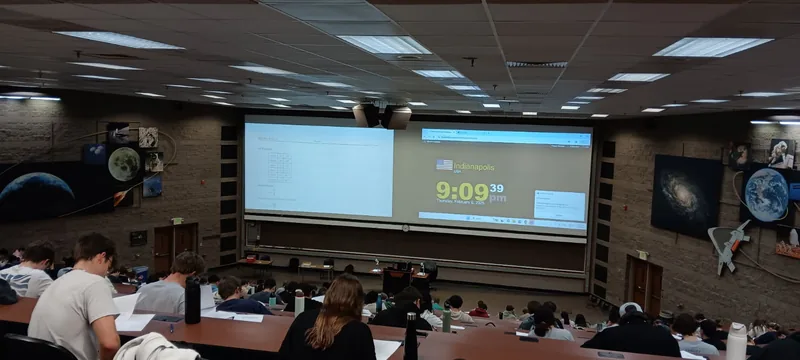
The JATC first checks your application against its basic requirements. Common ones include a minimum age, a high school diploma or GED, and one year of algebra with a passing grade. If you meet them, the JATC schedules you for the test, if it requires one. The ALLIANCE notes that some programs waive the basic requirements for applicants with documented electrical construction work hours. electrical training ALLIANCE: applying for apprenticeship
What's on the test

The test battery has two timed tests with a short break between them:
| Test | Questions | Time |
|---|---|---|
| Algebra and Functions | 33 | 46 minutes |
| Reading Comprehension | 36 | 51 minutes |
- Length. The battery takes about two and a half hours. The ALLIANCE suggests planning on about three hours at the test center.
- No calculator. Pencils and other materials are provided. A watch with a built-in calculator has to come off.
- Bring a photo ID. In the ALLIANCE's words: "No ID, No Test, No Exceptions!"
- No guessing penalty. Your score is the number of questions you answer correctly. Each question has one correct answer.
- One sitting. You can't finish the tests on another day. If you don't finish, your score is based on the questions you completed, and you can't test again for 90 days.
- No electrical knowledge needed. The ALLIANCE says you don't need to memorize formulas or know electrical work. It publishes sample algebra and reading questions with an answer key.
If a disability may affect your testing, tell the JATC before the test, or as soon as you are scheduled. Requests made on the test day can't be handled that day, and you will usually need documentation.
How it's scored
Results reach the JATC about two to four weeks after the test. The ALLIANCE says applicants are told whether they received a qualifying score, not their exact score.
Richmond's JATC describes the score as a "stanine" ("standard nine") on a nine-point scale. New Mexico's JATC grades it from 1 to 9, with 9 the highest.
The ALLIANCE describes what happens next. A qualifying score leads to an oral interview with a committee representing NECA and the IBEW. After the interview, you receive an overall ranking and go on an eligibility list for two years. Apprentices are chosen from the list in ranking order as openings come up, and if you aren't chosen within two years, you need to reapply. Some programs keep their list for less time: Wichita and Louisville each keep it for one year.
Minimum scores differ by program
Each program sets its own cutoff. These are the minimums programs published when we checked:
| Program | Published minimum |
|---|---|
| IBEW Local 3, New York City | 3 or above |
| New Orleans (IBEW Local 130) | 3 or higher |
| New Mexico JATC | at least 4, for an interview |
| Wichita Electrical JATC | 4 or higher |
| Western Oklahoma | 4 (out of 9) |
| Richmond Electricians' JATC | 4 or better |
| Atlanta Electrical JATC | 5 of 9 |
| Puget Sound Electrical JATC, Inside Wireman | 5 or higher (4 for Limited Energy) |
Richmond's, Atlanta's and New Orleans's pages give a minimum without naming the test, so confirm with them which test they use.
Meeting a minimum gets you to the next step; it doesn't guarantee an interview or a place.
Some programs use a different test
Not every IBEW/NECA program uses the ALLIANCE test. The Greater Boston and Phoenix JATCs use the GAN Aptitude Test, developed by GAN Human Resources. Its five areas are reading, numerical computation, numerical reasoning, paper folding and mechanical reasoning. Both programs say it has no minimum score, but a higher score counts in your favor. Boston has all applicants take it each year.
Indianapolis's fall 2026 apprenticeship handbook names the ALLIANCE test, with a minimum of 4. Its FAQ says the test has no minimum, though only top candidates are interviewed, and it links a GAN study guide. Applications made before October 1, 2026 are processed under its "previous system". Confirm which test your program gives before you study.
Retaking the test
- The ALLIANCE's rule: you can retake the test after three months (90 days) from your most recent test date. A retest taken earlier doesn't count, and it starts another 90-day wait. Deliberately breaking this rule can lead to permanent disqualification.
- A conflict in that rule: the same ALLIANCE page also says "The six month rule remains in effect after each subsequent retake of the test." Ask your JATC how long you must wait before a second or later retake.
- Programs can set longer waits. Richmond's JATC allows a retest 90 days after the last test. Puget Sound's apprenticeship standards, dated April 20, 2023, require a six-month wait for Inside Wireman applicants who score below 5 and Limited Energy applicants who score below 4.
Fees and how to register
You don't register with the ALLIANCE. You sign up through your local JATC's application, and fees and test schedules are set locally. For example:
- Atlanta charges a $23 aptitude test fee.
- Omaha gives the test at its office. An applicant who has turned in a high school transcript or GED and a valid driver's license qualifies for the next available test. Omaha paused new applications on September 1, 2026.
- Western Oklahoma tests one day a month, for the first 30 applicants who complete their application packets. Others are scheduled in later months.
- New Orleans sends a letter with your test date a few weeks after you submit a complete application, and offers the test every 5 to 6 weeks.
Many programs also charge a separate application fee, such as $25 in New Mexico and Wichita, and a $25 money order in New Orleans.
Before you test

- Find your program on our electrical apprenticeship listings. Check its minimum score, retest wait, fees and test dates on its own pages.
- Work through the ALLIANCE's sample questions. If a type of question is hard for you, review similar material.
- Arrive at least 15 minutes early with your photo ID. Leave the calculator at home, and arrange childcare, because children aren't allowed at the test center.
For the rest of the route into the trade, see how to become an electrician.