

Electrical training can be paid for in several ways, and which ones fit depends on the path you take. A registered apprenticeship is a paid job with classes attached. A school program may qualify for a federal Pell Grant or a state grant. Either path may qualify for training funds under the Workforce Innovation and Opportunity Act (WIOA), which you apply for through an American Job Center. This guide explains how each route works and who decides. Amounts and local rules vary, so the office or school you apply to has the final word.
| Route | What it helps with | Where to ask |
|---|---|---|
| Registered apprenticeship | You are paid to work while you train; class costs depend on the sponsor | The apprenticeship sponsor |
| WIOA training funds | Training on your state's list of eligible programs, apprenticeships included | Your local American Job Center |
| Pell Grant | Eligible programs at schools that take federal student aid | The school's financial aid office, through the FAFSA |
| State programs | Varies by state; two examples below | Your state's program or the school |
Apprenticeships: paid work, but class costs vary
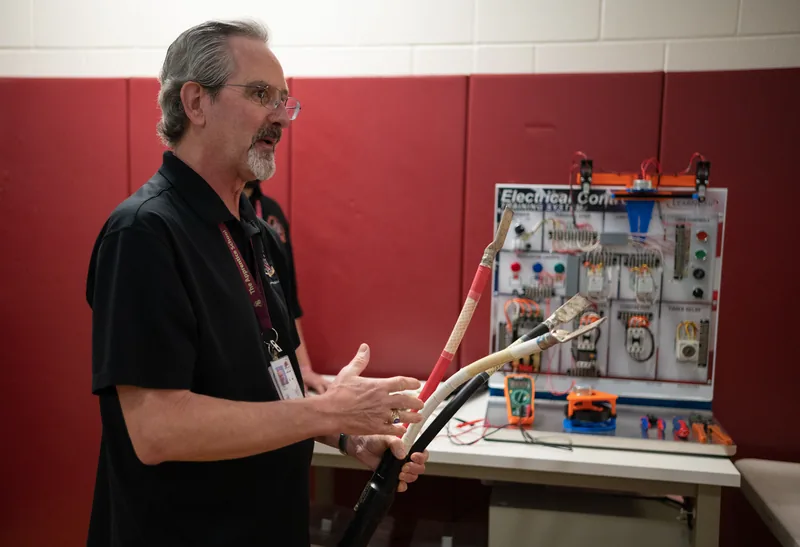
The U.S. Department of Labor describes registered apprenticeship as a paid job: apprentices earn a wage from day one, get raises as their skills grow, take classroom instruction alongside work experience, and earn a nationally recognized credential. Apprenticeship.gov: career seekers
The job pays you, but the classes are not always free. Each sponsor sets its own costs. Here is what five electrical sponsors said on their own pages when we checked:
| Sponsor | What its own page says about cost |
|---|---|
| Kansas City Electrical JATC | No tuition; you pay for books and personal hand tools |
| Greater Boston JATC | No tuition; a $50 application fee, plus books and apprentice fees of about $1,200 a year |
| North Texas Electrical JATC | About $7,500 in total ($1,875 a year for four years), due each semester; it offers no financial aid |
| IEC Dallas | Tuition is deducted from your pay for each hour worked |
| IEC Rocky Mountain | $600 to $1,000 a semester plus $450 to $650 a year for books; many contractors help, reimbursing up to 100% |
IEC Dallas writes its rate as ".53 cents an hour", which could mean 53 cents or about half a cent, so ask the sponsor what it means. Before you apply anywhere, ask about tuition, books, tools, application fees, and whether your employer will pay any of them.
Apprenticeships can also use WIOA funds. Under the Department of Labor's WIOA rules, programs registered with the Department or a state apprenticeship agency are automatically eligible for their state's list of approved training programs, once the sponsor agrees to be listed. A training account can then pay for pre-apprenticeship training or for training within a registered apprenticeship. For example, Kansas's KANSASWORKS list shows the Wichita Electrical Apprenticeship Training Program as a WIOA-approved program. 20 CFR part 680
If you are still choosing between an apprenticeship and school, see apprenticeship vs. trade school. Many union programs also require an aptitude test first.
WIOA: training funds through American Job Centers
WIOA's adult and dislocated worker programs pay for job training through the country's American Job Centers. The adult program is for people 18 and older (20 CFR 680.120). The dislocated worker program helps people who lost a job, for example through layoffs, get back to work. U.S. Department of Labor: WIOA adult and dislocated worker program
Who gets training. Under the Department of Labor's rules, the job center decides, after an interview or assessment and career planning, whether you need training to get a job that supports you and whether you have the skills to complete it. The training you choose has to be linked to jobs in your area, or in an area you are willing to commute or move to. 20 CFR 680.210
Who goes first. When job centers spend adult program money on training, they must give priority to people on public assistance, other people with low incomes, and people who lack basic skills. Veterans get priority of service in all employment programs funded by the Department of Labor.
How it pays. Training is usually paid through an Individual Training Account (ITA), a payment agreement the job center sets up with the training provider on your behalf. You choose a program from your state's list of eligible training providers, with help from a career planner. States must publish the list online. Unless the program has run out of training money for the year, the job center then refers you to that provider and sets up the account.
Limits vary. Your state or local workforce board can cap how much an ITA pays and how long it lasts. If the training you choose costs more, you can combine the ITA with other money such as a Pell Grant, scholarships or severance pay. Because the caps are set locally, ask your job center what applies to you.
WIOA comes after other grants. WIOA training money goes to people who can't get enough grant aid elsewhere. Job centers must consider other grants first, including Pell Grants and state training funds, so WIOA adds to them. You can start WIOA-funded training while your Pell application is pending; if the Pell Grant comes through, the school repays the job center for the part Pell covers.
How to start. Find your nearest center with the American Job Center Finder on CareerOneStop, or call the Department of Labor's toll-free help line at 1-877-US-2JOBS (TTY: 1-877-872-5627). The Department notes that services vary from state to state and some have eligibility requirements, so check with your local center. U.S. Department of Labor: American Job Centers
Pell Grants for school programs
A Pell Grant is federal student aid for undergraduates. You generally can't get one if you already have a bachelor's degree, and you can't get one at all if you have a graduate or professional degree. Your eligibility is worked out from your Free Application for Federal Student Aid (FAFSA). Federal Student Aid Handbook 2026–27: student eligibility for Pell Grants
The program has to qualify as well as the student. Many electrical programs at trade schools are measured in clock hours. Federal Student Aid's rules for those schools say:
| Program length | Federal aid it can use |
|---|---|
| At least 600 clock hours, over at least 15 weeks | Pell Grants and other federal aid |
| 300 to 599 clock hours, over at least 10 weeks (a "short-term program") | Federal Direct Loans only, not Pell |
| 150 to 599 clock hours, over 8 to 14 weeks, approved as a "workforce program" | Workforce Pell Grants |
Source: Federal Student Aid Handbook 2026–27: program eligibility. The same rules allow credit-hour equivalents. At public and nonprofit colleges, degree programs and certificate programs of at least one academic year that prepare students for a recognized occupation are eligible too.
Workforce Pell is new. The One Big Beautiful Bill Act, signed in July 2025, created Pell Grants for shorter "eligible workforce programs". Each program has to be approved by the state's governor and by the U.S. Department of Education, must have run for at least a year, and must show completion and job placement rates of at least 70 percent. A student with a bachelor's degree can get a Workforce Pell Grant, but not a student who already has a graduate credential. You can't mark a workforce program on the FAFSA; the school's financial aid office decides. Federal Student Aid made the governors' certification form available on July 1, 2026. Federal Student Aid: eligible workforce programs
Because approval is program by program, ask the school's financial aid office whether your exact electrical program is eligible for Pell, Workforce Pell or neither before you count on it. You can browse programs on our electrical school listings.
State programs: two examples
Many states run their own grants or scholarships. Two examples show how different they can be.
Michigan Reconnect is a last-dollar scholarship: your Pell Grant and other state tuition aid are applied first, and Reconnect pays the rest of in-district tuition, mandatory fees and contact-hour charges at Michigan's 28 public community colleges and 2 tribal colleges. You must be at least 21 when you apply, have a high school diploma or equivalent, have lived in Michigan for at least a year, file the FAFSA, and not already have an associate or bachelor's degree. It can be used for any Pell-eligible skill certificate or associate degree program. It doesn't cover out-of-district tuition, textbooks or other course materials. Michigan Reconnect FAQs The Michigan Reconnect page also points adults to their local Michigan Works agency for tuition assistance. See electrical schools in Michigan.
The program's page description still says Reconnect is for adults 25 and older, which conflicts with the FAQ's age 21. We follow the FAQ's eligibility list; confirm with the program.
Tennessee Reconnect at a TCAT is a last-dollar grant toward a certificate or diploma at a Tennessee College of Applied Technology (TCAT). It pays the tuition left after other federal and state aid. You must be a Tennessee resident, qualify as an independent student on the FAFSA, and enroll full-time, among other requirements. There's no separate application: you apply to the TCAT and file the FAFSA by its deadlines. You still pay for books and supplies. Tennessee Reconnect TCAT Grant See electrical schools in Tennessee.
A short checklist
- Decide which path you're considering: apprenticeships, schools, or both.
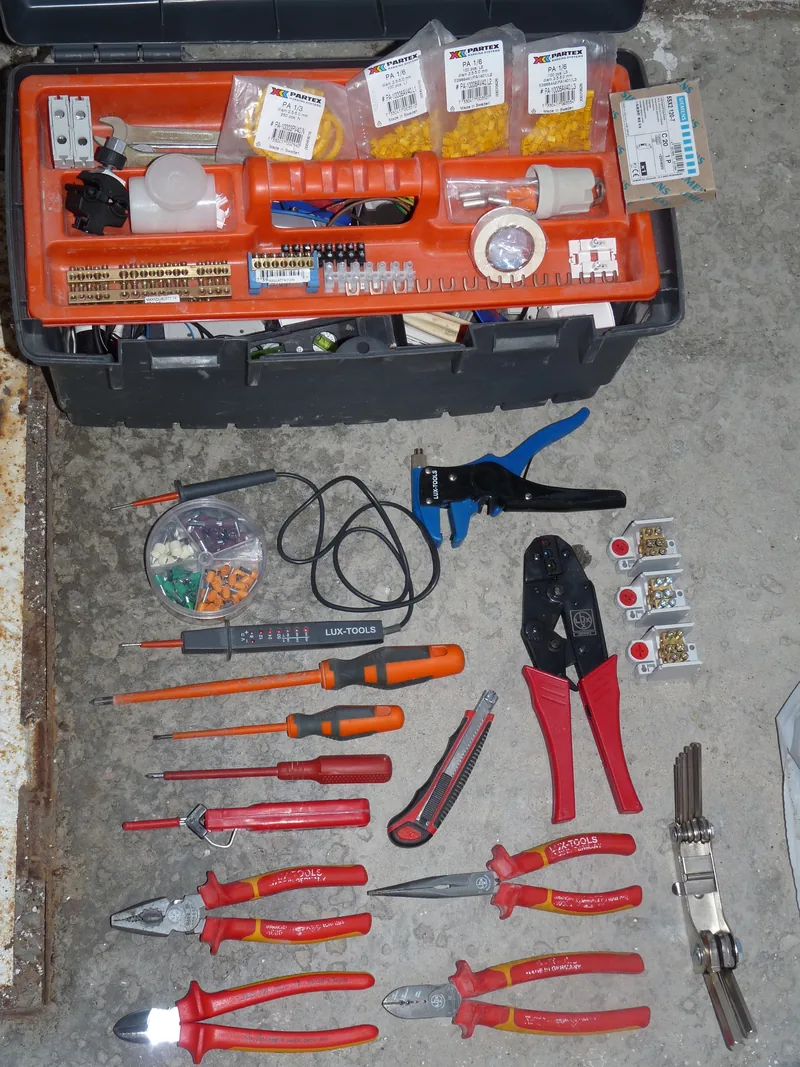
- For an apprenticeship, ask the sponsor what you will pay for tuition, books, tools and fees, and whether employers repay any of it.
- For a school, file the FAFSA and ask the financial aid office whether your exact program is Pell-eligible.
- Check your state's grant programs for adults or technical training.
- Contact an American Job Center to ask about WIOA training funds, especially if you are out of work or have a low income.