

Data centers have become one of the most talked-about places for electricians to work. This guide covers what the work involves, how people usually train for it, which licenses apply, how employers describe travel and per diem, and what official wage data can and cannot tell you. Pay and travel terms belong to each employer and project. Check the current posting and your state's rules before you decide.
What the work involves
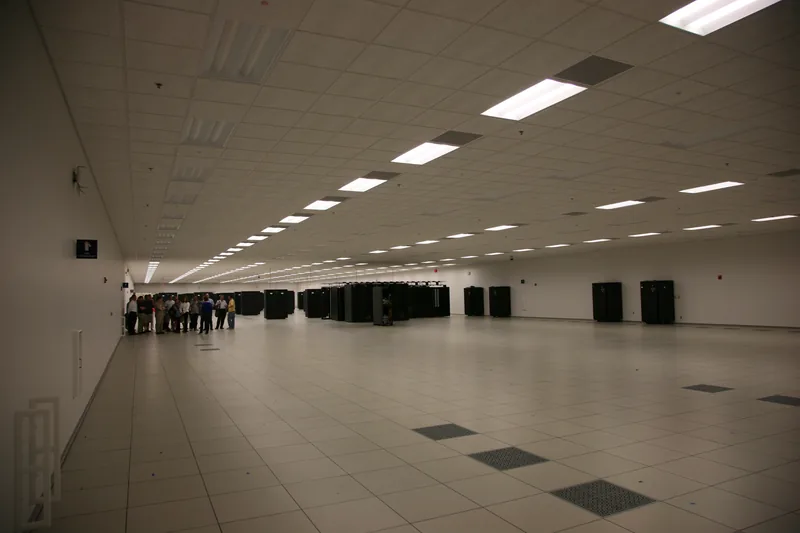
None of the training or licensing sources in this guide treats data center work as a separate trade: data center projects use the same apprenticeships and licenses as other commercial and industrial electrical work, with a lot of power equipment in one place.
Enterprise Electrical, a Houston electrical contractor, has posted jobs for a data center project that the postings place in San Antonio, Texas: a foreman opening posted in October 2026 and an earlier apprentice opening that was no longer open on October 15, 2026. (The foreman posting's location field says Monroe, Louisiana, while its description says San Antonio.) The postings describe the work:
- Installation. Conduit systems (EMT, RMC and IMC), cable tray, wire pulls and terminations, and grounding and bonding.
- Power equipment. Power distribution, switchgear, transformers, UPS units and PDUs.
- Where you work. Electrical rooms, data halls and support spaces, with strict access, housekeeping and work-sequencing rules in sensitive areas.
- Safety and quality. OSHA, NEC and NFPA 70E rules, daily job hazard analyses, and support for inspections, testing and commissioning.
Enterprise Electrical: foreman, data center
The U.S. Bureau of Labor Statistics (BLS) mentions data centers in its outlook for electricians. It says growing use of artificial intelligence and demand for data centers are expected to add to electricity demand, and that grid upgrades and new infrastructure are expected to create jobs for electricians to install and connect electrical systems and power sources to the grid. BLS projects electrician employment to grow 9 percent from 2025 to 2035, with about 72,700 openings a year on average. That projection covers all electricians, not data center work alone. BLS Occupational Outlook Handbook: electricians
Specialties, as training sponsors describe them
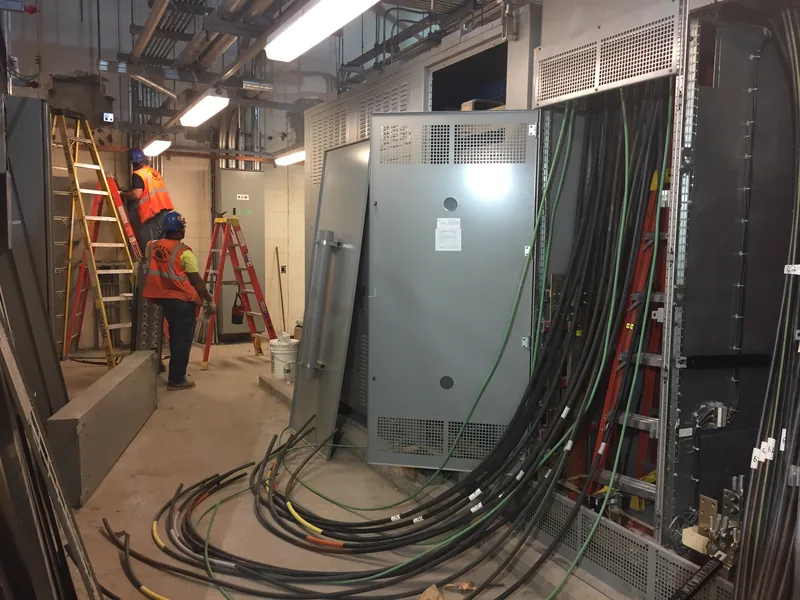
Data center postings call for skills that are taught in ordinary apprenticeships. None of the sources below is a data center program.
- Power, lighting and controls. The electrical training ALLIANCE, the IBEW and NECA training organization, says inside wiremen "install the power, lighting, controls and other electrical equipment in commercial and industrial buildings." electrical training ALLIANCE: apprenticeship training
- Low voltage. The ALLIANCE says VDV installer technicians install circuits and equipment for computer networks, telephones, security and access control and other low voltage systems, working beside the inside wireman. Their work includes terminating and testing copper and fiber-optic cable and testing and certifying network cabling. electrical training ALLIANCE: installer technician
- Medium-voltage terminations and controls. Wake Technical Community College's Electrical Apprenticeship Level 4, the fourth-year class in its NCCER-based apprentice program, includes advanced controls, HVAC controls, and medium-voltage terminations and splices. Wake Tech: Electrical Apprenticeship Level 4
Which of these you learn depends on your program and the jobs you're sent to. Ask a program what its curriculum covers before you apply.
The usual route in: an apprenticeship, then a license where your state requires one
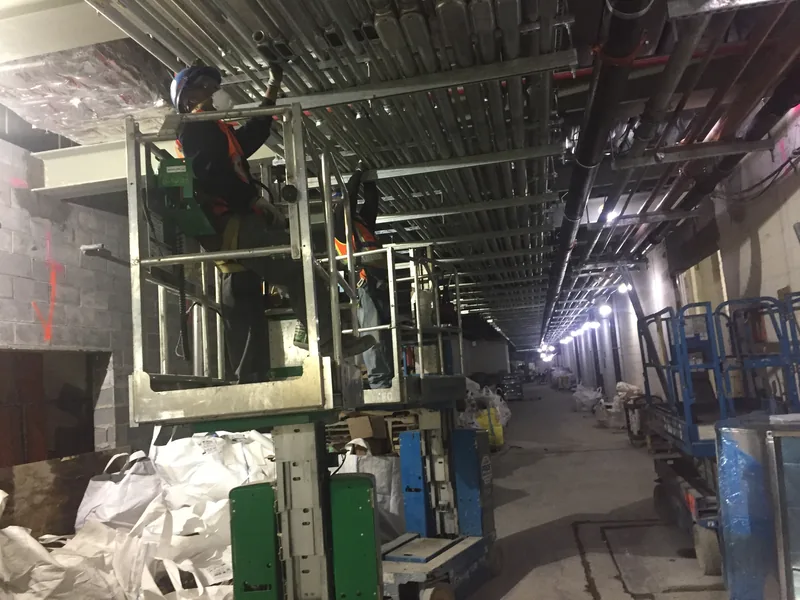
BLS says most electricians learn the trade in a 4- or 5-year apprenticeship, with about 2,000 hours of paid on-the-job training each year plus technical instruction. Unions and contractor associations both sponsor programs, and requirements vary by state and locality. The Independent Electrical Contractors (IEC), a contractor association, says its apprenticeship typically takes about four years, with at least 8,000 hours of on-the-job training and 576 hours of classroom instruction. IEC says starting apprentice wages are typically 50 percent of a journeyman's rate. IEC: electrical apprenticeship
BLS says most states require electricians to pass a test and be licensed, and that the requirements vary by state. Texas, where the postings place the project, is one example:
- The Texas Department of Licensing and Regulation (TDLR) says anyone who does non-exempt electrical work in Texas must be licensed and work through a licensed electrical contractor. TDLR: electricians
- An apprentice license needs no experience or exam. Apprentices work under the general supervision of a master electrician, journeyman electrician or residential wireman. TDLR: apprentice electrician
- A journeyman license needs 8,000 hours of on-the-job training under a Texas master electrician, plus an exam. You can sit the exam once you have 7,000 hours. TDLR: journeyman electrician
Enterprise Electrical's apprentice posting asked for a valid TDLR electrical license. The foreman posting asks for a state journeyman or master license where one applies.
Find programs on the electrical apprenticeships page, and your state's rules on the electrician licensing pages (for example, Texas). If a job is in another state, check that state's page before you go.
Travel, per diem and long schedules
BLS says electricians travel between work sites, so local or long-distance commuting is often required, and that overtime is common.
Enterprise Electrical's two postings show how one employer describes data center work away from home:
| Apprentice posting | Foreman posting | |
|---|---|---|
| Hourly pay | $15–$20 (entry level) to $30–$35 (over 2 years' experience) | $52–$55 |
| Per diem | $120 a day, paid 7 days a week | $150 a day, paid 7 days a week |
| Retention bonus | $5.00 an hour | $5.00 an hour |
| Schedule | 6/10s | 6/10s |
| Project length | 1 year or more | 1 year or more |
A 6/10s schedule is six 10-hour days, or 60 hours a week. The apprentice posting also mentions travel support and ongoing travel to data centers around the United States. Neither posting states an overtime rate.
These are one employer's terms for one project, and the apprentice opening has closed. Before you accept a travel job, ask:
- Is per diem paid on days you don't work, and does it change if the employer provides housing?
- What is the overtime rate, and after how many hours does it start?
- How long is the project, and what work is lined up after it ends?
- Does your license cover the state where the project is?
- Who pays travel to and from the site?
What official wage data shows
BLS reports a median wage for electricians of $63,190 a year ($30.38 an hour) in May 2025. The lowest 10 percent earned less than $42,640 and the highest 10 percent earned more than $108,510. Among the industries that employ the most electricians, BLS reports these May 2025 medians:
- Government, excluding state and local education and hospitals: $79,820
- Manufacturing: $74,550
- Electrical contractors and other wiring installation contractors: $61,570
- Employment services: $57,760
BLS says electrical contractors employ 66 percent of electricians.
There is no official wage series for data center electricians. BLS's Occupational Employment and Wage Statistics (OEWS) survey asks employers about their workers, so it groups electricians by the industry of the business that employs them, not by the kind of building they work in. Its May 2025 industry estimates include the industry that runs computing infrastructure and data processing and web hosting, but publish no electrician figure for it. An electrician building a data center for an electrical contractor is counted with electrical contractors. BLS: OEWS May 2025 industry estimates
OEWS wages are straight-time pay. They exclude overtime pay, shift differentials and nonproduction bonuses. BLS: OEWS technical notes, May 2025 Per diem is a separate payment in the postings above, not part of the hourly rate.
Official medians and those posts measure different things. Posts claiming that data center electricians earn several hundred thousand dollars a year are claims, not official statistics. A week that combines 60 hours, an overtime premium, seven days of per diem and a retention bonus can produce a large paycheck. It doesn't tell you what a year will pay once projects end, travel costs come out, or the schedule changes.
Compare state wages on the electrician salary pages (for example, Texas), and read the electrician salary guide for how to judge an offer.