

What electrical theory covers
Electrical theory explains why circuits behave the way they do: how voltage, current and resistance relate, why alternating current behaves differently from direct current, and how transformers and motors work. BLS says technical instruction for electrician apprentices includes electrical theory, blueprint reading, mathematics, electrical code requirements, and safety and first-aid practices.
If you are in an apprenticeship or a school program, follow its curriculum and use the resources below for a second explanation or extra practice. If you are studying before you apply, work through the topics in the order below. Links to other Trades Directory pages go to our catalog listing for that resource.
| Topic | Free place to start | Structured or paid option |
|---|---|---|
| DC circuits and the math | Lessons In Electric Circuits, Volume I | U.S. Career Institute, CourseCareers |
| AC, power and power factor | Lessons In Electric Circuits, Volume II, Electrician U on YouTube | Electrician U Learning System |
| Motors, transformers and controls | Volume II chapters on transformers, polyphase circuits and AC motors; Craig Michaud; Cursa | — |
| Calculations for code and exams | Craig Michaud | Ugly’s Electrical References, Mike Holt exam prep |
DC circuits and the math behind them
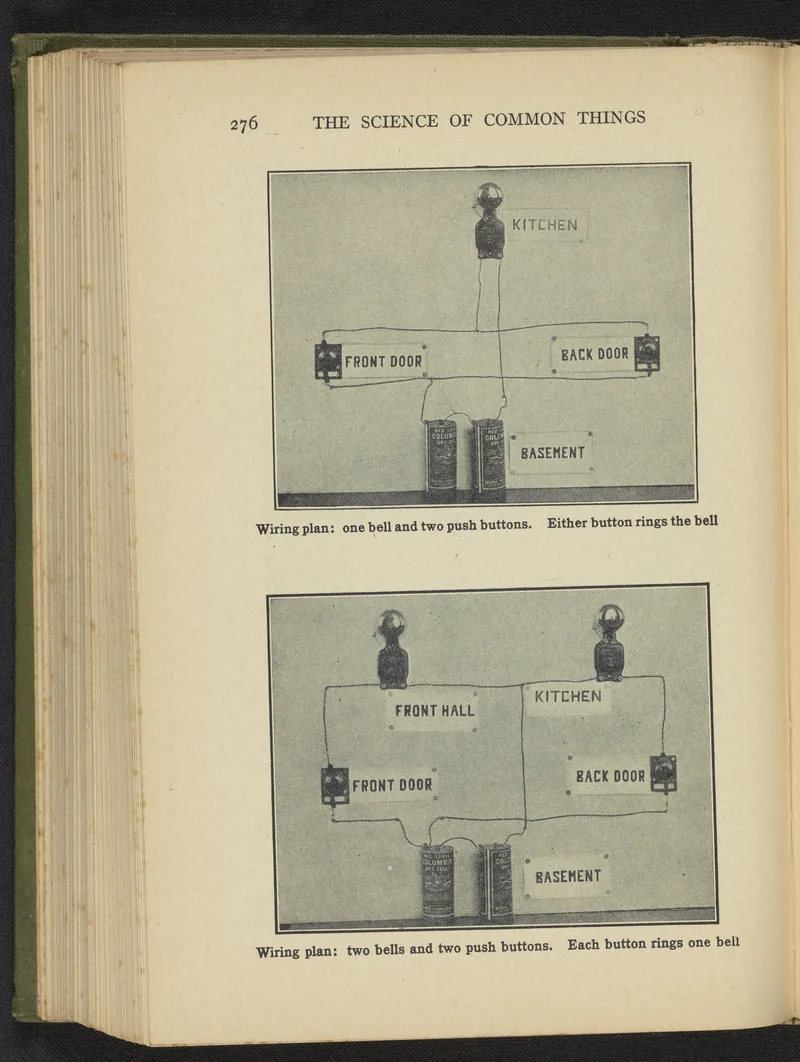
Start here even if your goal is AC or motor work. Ohm’s law, power, and series and parallel circuits carry through every later topic, and so does comfort with metric prefixes and rearranging formulas.
- Lessons In Electric Circuits, Volume I (DC) by Tony R. Kuphaldt is a free textbook released under a Creative Commons license. Its chapters run from basic concepts of electricity and Ohm’s law through series and parallel circuits, divider circuits and Kirchhoff’s laws, DC network analysis, capacitors, magnetism and inductors, with a chapter on scientific notation and metric prefixes. It suits readers who learn from text and worked examples. The volume’s last substantial revision was in 2006; the physics has not changed, but don’t use it for code questions.
- U.S. Career Institute Online Electrician School is a paid, self-paced online program aimed at preparing students for an apprenticeship. Its curriculum covers units of measure, Ohm’s law, power equations, schematic diagrams, and series, parallel and series-parallel circuits. Its code study guide is built on a textbook for the 2020 NEC, so check that edition against what your area enforces.
- CourseCareers Electrician Course has a free introductory course; the full course is paid. Its outline includes an Electrical Theory section (an introduction and basic electrical circuitry) between safety and code. It is a short overview rather than a full theory course.
Work every problem by hand and say out loud why each step is valid. If you can’t predict what happens to current when you add a resistor in parallel before you calculate it, go back a chapter.
AC theory, power and power factor
AC usually takes longer than DC: sine waves, reactance, impedance, three-phase power and power factor lean on more math, so expect to spend more time here.
- Lessons In Electric Circuits, Volume II (AC) continues from Volume I with basic AC theory, complex numbers, inductive and capacitive reactance and impedance, resonance, transformers, polyphase AC circuits, power factor, AC metering and AC motors. Read it after Volume I, not instead of it.
- Electrician U posts free training videos on YouTube. Electrician U says its training videos, for apprentices through master electricians, cover everything from electrical theory and code to installation, troubleshooting and safety. Videos are useful when a textbook explanation doesn’t click.
- Electrician U Learning System is Electrician U’s paid membership, with hundreds of video lessons plus podcasts and articles, and a 7-day free trial. Consider it if you want the videos organized into a course rather than searching YouTube.
- ElectroBOOM describes itself as a channel to “subconsciously learn while being entertained”, with videos such as “The Pain of Electricity (AC versus DC)”. Treat it as motivation and demonstration alongside a textbook, not as a course, and never repeat its experiments.
Motors, transformers and controls
These topics connect theory to the equipment you will install and troubleshoot. They build directly on AC theory, so leave them until reactance and three-phase power make sense.
- Lessons In Electric Circuits, Volume II has chapters on transformers, polyphase AC circuits and AC motors.
- Craig Michaud – Electrical Instructor is a YouTube channel from an electrical instructor. Its playlists include Basic Motor Controls and Load Calculation/Service, and it has PLC programming tutorial videos.
- Cursa Free Online Electrician Courses offers free self-paced courses that list motors, schematics and circuits among their topics. Cursa issues a free completion certificate; a course certificate is not a license and does not count toward an apprenticeship unless the program says so.
Calculations for code and exams
Theory meets the code in calculations such as voltage drop, load calculations, conductor sizing and conduit fill, which are a common focus of exam preparation. This is also where the code edition starts to matter.
- Craig Michaud has free videos on voltage drop calculations, range demand under Table 220.55, and conduit fill.
- Ugly’s Electrical References, 2026 Edition is a pocket-sized reference with mathematical formulas, transformer and control circuit wiring diagrams, ampacity and conduit fill information, and conversion tables. It is a reference for looking things up, not a way to learn the theory in the first place.
- Mike Holt Electrical Exam Preparation offers exam-prep libraries for journeyman, master and electrical contractor exams; Mike Holt says each covers theory, the National Electrical Code and calculations, with practice questions and video instruction. It is aimed at candidates close to an exam, not beginners.
Before buying code-based material, confirm which NEC edition your licensing authority uses; the electrician licensing guide explains how to check.
Where to ask when you’re stuck
- ElectricianTalk describes itself as a pros-only community for professional electricians and apprentices, with an apprentice forum.
- EEVblog Electronics Community Forum has a beginners section for electronics questions. It leans toward electronics rather than building wiring, which can help with circuit theory but not with installation questions.
Include your working when you ask, check answers against your textbook, and don’t treat a forum reply as the answer to a code or safety question.
How to choose
- Pick one main source per topic and use the others to fill gaps; switching between five explanations of the same idea is slower than working through one.
- Match the format to how you learn. A textbook with worked examples rewards patience, videos help when a concept won’t click, and a paid course gives structure and deadlines.
- Theory ages slowly; code material doesn’t. An older circuits textbook is fine, but books, courses and exam prep built on a code edition should match the edition you will be tested on.
- Be wary of promises. No resource can guarantee a pass. A course completion certificate is not a license, and it counts toward an apprenticeship only if the apprenticeship program says so.